
"Lujiang Farm"
300 article(s) found

Yunnan Coffee production Base introduction: the first coffee factory in China the development history of coffee beans in Yunnan, China
Professional coffee knowledge exchange more coffee bean information please follow the coffee workshop (Wechat official account cafe_style) in 1955, Yunnan reclamation people began to defend the border in Baoshan, Yunnan state-run Lujiang farmers

Where is the first coffee factory in China? Yunnan small Coffee Brand-how about Yunnan Nongken Coffee
Professional coffee knowledge exchange more information about coffee beans Please follow the coffee workshop (official account cafe_style of Wechat) when talking about Yunnan small-grain coffee, we have to mention Yunnan coffee factory. In 1955, Yunnan reclamation people began to operate Lujiang farmers in Baoshan, Yunnan Province.

Katim Fine Coffee Bean Varieties Planting Location Climate Elevation Profile
1. The state-owned Lujiang Farm in Baoshan City was planted in March 1991 with an area of 12.6 mu. There was no shade and irrigation once in dry season. The management level and fertilizer application level were medium. The fruit was produced in 1993. The average yield per mu in 93/94 was 75 kg. The average yield per mu in 94/95 was 350 kg. The average yield per mu in 95/96 was 225 kg. The average yield per mu in three years was 217 kg. The yield was 36% higher than that of Tibika and Bobang (Tibika and Bobang

A brief introduction to the History and Culture of the Origin and Development of small Fine Coffee beans in Yunnan
In recent years, the development of Yunnan coffee is really good, and it is more standardized, with a full range of varieties, sun drying, shade drying, honey treatment, high altitude, yellow bourbon, and so on. The variety from bean seeds to treatment methods is no longer the Yunnan coffee before. Data sources online honey processing method: honey treatment is the process of making raw coffee beans by removing the peel and pulp layer and drying the raw coffee beans with mucous membrane.

Chinese coffee has ushered in a recovery period with the country's reform and opening up.
From December 18 to 22, 1978, the third plenary session of Communist Party of China's 11th Central Committee was held in Beijing. The main achievements of this conference are: re-establishing the party's Marxist ideological line. The plenum resolutely criticized the two general erroneous policies, spoke highly of the discussion on the standard of truth, and determined to emancipate the mind, use the brain, seek truth from facts,

Introduction to the characteristics of varieties in Yunnan Tieka Coffee Bean Flavor description
Yunnan Tieka coffee beans are mainly planted in Dehong Lincang and Pu'er Banna in western Yunnan. Robusta was the main coffee introduced by missionaries in the 19th century, and then they were no longer planted on a large scale. In the 1950s, experts assisted by the Soviet Union put two mainstream Arabica varieties in the world: typica and Bourbon bourb.

Yunnan coffee factory origin and development history_Yunfei coffee how to_Yunfei have Yunnan small coffee?
Professional coffee knowledge exchange More coffee bean information Please pay attention to coffee workshop (Weixin Official Accounts cafe_style) Time polishing years, years precipitation fine products, fine products for a long time. Good coffee is not only mixed with unique natural aroma, but also accumulated the essence of the sun and moon behind it, containing the agarwood of history.● Yunnan, as the main coffee growing area, has a unique natural environment.

Coffee growing environment
Arabica scientific name: Coffea arabica family: Rubiaceae coffee morphological characteristics: small trees or large shrubs, plant height 5~8 meters. Base usually much branched, older branches gray. nodes dilated, young branches glabrous. Leaves thin leathery ovate-lanceolate or lanceolate, apex long acuminate, base cuneate or slightly obtuse, entire or shallowly undulate, glabrous on both sides. Cymes several clustered in leaf axils
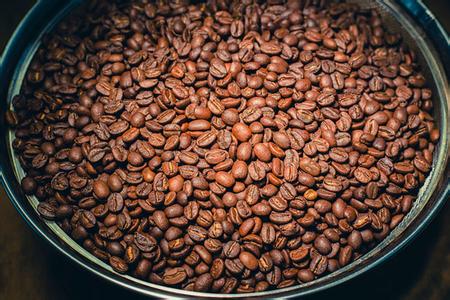
Flavor description of sun-cured coffee beans in Baoshan, Yunnan Province
The flavor of sun-cured coffee beans in Baoshan, Yunnan describes the environmental problems of coffee cultivation in the law-producing areas. Although it can reach the standard of hot areas, it is far away from the equator, the problem of evaporation, and the large-scale coffee cultivation in Yunnan is less than 1100m above sea level. in recent years, the severe drought in Yunnan, as well as the frost period in the producing areas, have made it impossible to guarantee the cultivation of coffee, which directly affected the quality of coffee production. To

Growth Environment and brewing of small Coffee
Small grain coffee scientific name: Coffea arabica family genus: Rubiaceae coffee genus morphological characteristics: small trees or large shrubs, plant height 5 meters 8 meters. Base usually much branched, old branches gray-white. Nodes inflated, young branches glabrous. Leaves thinly leathery-ovate-lanceolate or lanceolate, apex long acuminate, base cuneate or slightly obtuse, entire or shallowly wavy, both surfaces glabrous. Cymes several clustered in leaf axils

The introduction and source of small coffee novice must see
Arabica scientific name: Coffea arabica family: Rubiaceae coffee morphological characteristics: small trees or large shrubs, plant height 5~8 meters. Base usually much branched, older branches gray. nodes dilated, young branches glabrous. Leaves thin leathery ovate-lanceolate or lanceolate, apex long acuminate, base cuneate or slightly obtuse, entire or shallowly undulate, glabrous on both sides. Cymes several clustered in leaf axils

Yunnan coffee common sense coffee growing environment and brewing
Arabica scientific name: Coffea arabica family: Rubiaceae coffee morphological characteristics: small trees or large shrubs, plant height 5~8 meters. Base usually much branched, older branches gray. nodes dilated, young branches glabrous. Leaves thin leathery ovate-lanceolate or lanceolate, apex long acuminate, base cuneate or slightly obtuse, entire or shallowly undulate, glabrous on both sides. Cymes several clustered in leaf axils

Flavor description of Organic Coffee beans grown in Alpine catimor of Yunnan Province
Flavor description of Yunnan catimor Alpine Organic Coffee beans Taste treatment production areas introduce two classic high-quality coffee varieties, Typica and Bourbon, which are the main varieties of coffee in Yunnan, and the Katimo Catimor series were introduced from Kenya in 1991 (stronger anti-virus ability and higher yield). The variation of Arabian species (also known as small-grained species)

Introduction to varieties of Grinding scale for Flavor description treatment of Yunnan small-grain Coffee
Yunnan can be said to be the only province that still grows Arabica on a large scale, mainly in Dehong Lincang, Baoshan, western Yunnan and Pu'er Banna in southern Yunnan. Robusta was the main coffee introduced by missionaries in the 19th century, and then it was no longer planted on a large scale. In the 1950s, experts assisted by the Soviet Union put two mainstream Arabica varieties in the world: typica and Bo.

Common sense of Chinese Coffee growth Environment and brewing of small Coffee
Small grain coffee scientific name: Coffea arabica family genus: Rubiaceae coffee genus morphological characteristics: small trees or large shrubs, plant height 5 meters 8 meters. Base usually much branched, old branches gray-white. Nodes inflated, young branches glabrous. Leaves thinly leathery-ovate-lanceolate or lanceolate, apex long acuminate, base cuneate or slightly obtuse, entire or shallowly wavy, both surfaces glabrous. Cymes several clustered in leaf axils
Flavor description of mantenin and Yunnan Arabica beans Grind scale Variety treatment Taste introduction
The two classic premium coffee varieties, Typica and Bourbon, are the main cultivars of Yunnan coffee. In 1991, Katimo Catimor series varieties (with stronger virus resistance and higher yield) were introduced from Kenya. It belongs to Arabian species (also known as small species)

General knowledge of fine coffee the growing environment of small-grain coffee
Small grain coffee scientific name: Coffea arabica family genus: Rubiaceae coffee genus morphological characteristics: small trees or large shrubs, plant height 5 meters 8 meters. Base usually much branched, old branches gray-white. Nodes inflated, young branches glabrous. Leaves thinly leathery-ovate-lanceolate or lanceolate, apex long acuminate, base cuneate or slightly obtuse, entire or shallowly wavy, both surfaces glabrous. Cymes several clustered in leaf axils

The Development Story of Yunnan Coffee introduction to which brand and brewing method of Yunnan coffee
Professional coffee knowledge exchange more coffee bean information please follow the coffee workshop (Wechat official account cafe_style) the development of coffee in Yunnan ● in the history of the introduction of coffee into Yunnan has a history of more than a hundred years, at that time through three ways to enter Yunnan, respectively, introduced by foreign missionaries
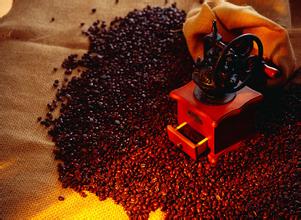
Introduction to the Grinding Calibration method for describing the Flavor of Yunnan small-grain Coffee
Yunnan small-grain coffee, that is, Arabica coffee, now belongs to an awkward position in the international market as well as in China. For example, coffee shops rank low in individual coffee, and the cheapest coffee is Yunnan coffee. This is an issue that cannot be avoided. Since you ask the landlord what is the difference between the main producing areas and the main producing areas, let's tell the story of the variety. Yunnan can be said to be present.

Common sense of Coffee beans in Yunnan growth Environment and brewing of small Coffee
Small grain coffee scientific name: Coffea arabica family genus: Rubiaceae coffee genus morphological characteristics: small trees or large shrubs, plant height 5 meters 8 meters. Base usually much branched, old branches gray-white. Nodes inflated, young branches glabrous. Leaves thinly leathery-ovate-lanceolate or lanceolate, apex long acuminate, base cuneate or slightly obtuse, entire or shallowly wavy, both surfaces glabrous. Cymes several clustered in leaf axils